Episode Summary
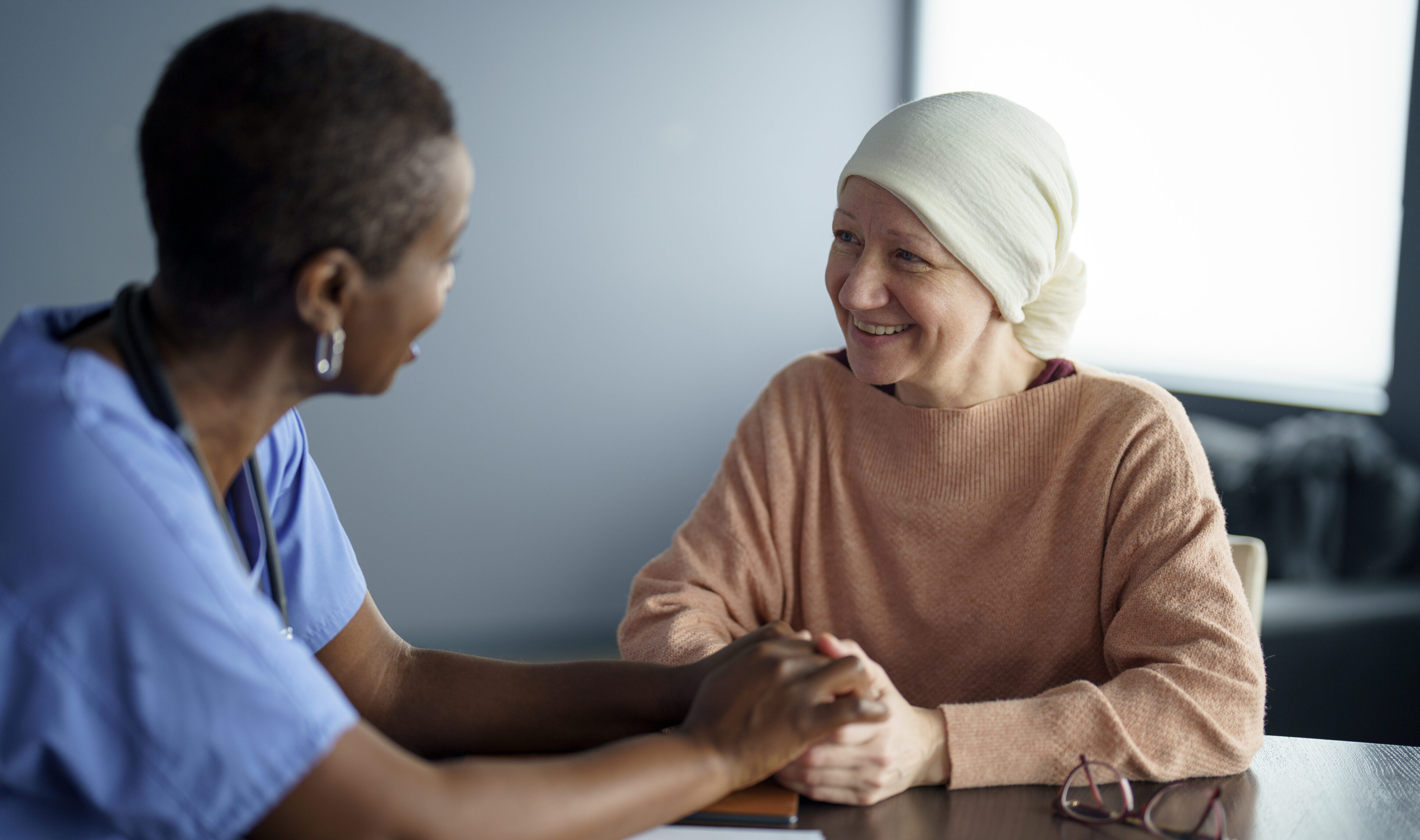
Cancer care is one of the most complex and expensive parts of employee healthcare. Decisions are made quickly, often before patients understand their options.
In this episode, Nancy Ryerson speaks with Yousuf Zafar, MD, MHS, Chief Medical Officer at AccessHope, about where cancer care breaks down and what actually changes outcomes. They explore why even experienced oncologists struggle to stay current, why patients rarely seek out second opinions, and how access to subspecialty expertise can improve care without forcing employees to travel.
In this episode, you’ll learn:
- Why many patients never receive subspecialty input
- The role expert review plays without disrupting local care
- The connection between better care decisions and long-term cost control
Key moments:
(00:00) Meet Yousuf Zafar
(01:19) What happens when expert review changes the course of cancer treatment
(03:42) Why even experienced oncologists can’t keep up
(05:27) Community oncology vs. academic cancer centers
(07:39) How patients choose care right after diagnosis
(08:05) Bringing subspecialty expertise to local cancer care
(10:27) Why second opinions rarely happen
(12:15) What’s really driving rising cancer costs
(18:05) How better care can lower long-term costs
(34:40) Advice for benefits leaders navigating cancer care
Resources:
Nancy Ryerson’s LinkedIn: https://www.linkedin.com/in/nancyryerson/
Yousuf Zafar’s LinkedIn: https://www.linkedin.com/in/yousufzafar/
AccessHope’s website: https://www.myaccesshope.org/
Episode Highlights
Complexity and collaboration in cancer care
Cancer care is complex, fast-moving, and deeply human. Yousuf Zafar shares a real story of how expert collaboration changed the course of care for a patient whose treatment had fallen out of step with the evidence.
Higher quality, lower-cost care
Cancer care can be expensive, especially in the short term. Yousuf Zafar explains how aligning treatment to evidence and standards of care leads to better outcomes and lower total costs over time on Making Healthcare Sustainable.
Episode Transcript
Yousuf Zafar (00:00):
More often than not, the patient is getting a cancer diagnosis and going with the first person that they can get access to and that likely will be a fantastic oncologist. It may not be an oncologist who specializes just in their cancer, and it’s very understandable where a patient with a new diagnosis might say, look, if you get me in the door of somebody who is near me who has availability, I can get going on treatment as soon as possible.
Nancy Ryerson (00:29):
This is making healthcare sustainable. Brought to you by Lantern. Cancer is one of the most personal experiences someone can face. It’s also one of the most complex and expensive parts of healthcare for employers and benefits leaders. That creates real tension. How do you support people through a cancer diagnosis without adding confusion, delay, or unnecessary cost? Today we’re talking about what’s actually changing in cancer care, what the data really says, where screening helps, where it creates new risk, and how decisions about quality access and cost show up in real lives. I’ll be talking with Yousuf Zafar, MD, chief Medical Officer at AccessHope. Yousuf will start with our think, feel, do segment. Which one did you choose?
Yousuf Zafar (01:19):
I’m going with Feel it’s hard to be an oncologist and not go with feels right. It’s such an important part of what we do. I was thinking about one member that we had an impact on and how it made me feel in terms of our ability to impact somebody, their care and their life really. So let me tell you about this member. This was a patient who was getting treated for his kidney cancer in a very rural setting. We did a review on his care and our kidney cancer expert who reviewed his case determined that the care he was getting was not aligned with the evidence and in fact was probably not helping control his cancer at all. So we did the review. That kidney cancer expert gave very detailed recommendations of what the patient’s oncologist could do next, and we sent the review because there was so much discordance between the patient’s care and our review.
(02:17):
We called that treating oncologist and said, Hey look, I just want to make sure you got this if you had any questions. And his response was really telling What that treating oncologist said was this review came at the perfect time. It came at a point when I really didn’t know what to do next for this patient. I was kind of at the limit of my understanding of what was best and what this review did was give me another standard of care option that I could give this patient and provided a clinical trial option that I didn’t know was available and I know my patient would be interested in going to get evaluated for this trial. Really what that showed me is it highlights the complexity of cancer care today along with the collaborative nature that is so important to make sure that our patients are getting the best of what’s possible in that complex environment. So I was really proud for AccessHope to be a part of that moment where we could impact that patient’s care and I was really delighted that patient had an opportunity to get that best care possible.
Nancy Ryerson (03:20):
Yeah, no, that’s a great story and I know you are a practicing oncologist, so I’m curious what makes it so difficult for oncologists to know about all the latest treatments. Obviously you’re in medical school for a long time, have your specialization, but why even with all that training, is it difficult for someone in the position you described to be aware of all the options for their patients?
Yousuf Zafar (03:42):
Yeah, it’s a really important question, Nancy. I mean I was in clinic this morning and so living through that complexity in real time, I mean I think there are a couple really interesting statistics that highlight why it’s hard to keep up. So I am a GI medical oncologist, so that means I only treat patients with gastrointestinal cancers. I only have to keep up with that subset of knowledge. An oncologist who’s treating patients in the community more often than not has to treat patients with all types of cancers, every cancer out there. So their day might be filled with going into a room that patient with a blood cancer, the next room is a patient with prostate cancer, the next room is a patient with breast cancer. They need to keep up with all of the evidence. What does that look like? Just in 20 25 16, new oncology drugs and indications were approved. 16 new drugs, approximately 7,000 new publications, new papers were published on cancer clinical trials. Imagine having to keep up with that fire hose of information. It is really hard. And so I think what happens most of the time is incredibly smart, incredibly compassionate and well-meaning community oncologists. They really make sure they can keep up with the first, second, maybe third line of therapy for every cancer. Then beyond that, they have to figure out what is next best and appropriate for their patient, which can be challenging in this environment.
Nancy Ryerson (05:05):
That’s hard. Obviously all of the new research and treatments coming out, that’s so exciting, but to your point, it’s so difficult to keep track of. And when you say community oncologists, you’re talking about people maybe in rural areas. I know you just shared that you live in Durham and the research triangle. That makes sense that there are a lot of specialists in that area, but rural communities might just have one oncologist. Is that right?
Yousuf Zafar (05:27):
Yeah, and I think that’s an important point, Nancy, to sort of help describe the landscape of where cancer care is delivered today. And it’s not just a rural area. When I talk about a community oncologist, so there are large academic referral centers in the country. These are National Cancer Institute designated comprehensive cancer centers. I worked at one for almost 20 years at Duke Cancer Institute here in Durham. And these are places where all of the sort of best research is happening. Many clinical trials are happening, and this is where oncologists really sort of subspecialize in terms of their disease practice. So me only see patients with one particular type of cancer outside of these academic centers, our community practices and there are community practices all over the country, not just in rural areas, but in New York and in Durham, and these practices are not necessarily sub-specialized and see all patients who come to them in that community. So yes, there is a greater number of community practices in rural areas, but we see them in metropolitan settings as well.
Nancy Ryerson (06:33):
So as a patient, let’s say you have test results come back, you find out that you have cancer, how do you then navigate to whether you’re seeing a community oncologist or if you’re seeing a specialist, what’s that experience like from the patient perspective?
Yousuf Zafar (06:47):
That experience can be challenging and more often than not the patient is getting a cancer diagnosis and going with the first person that they can get access to. It might be the oncologist that’s closest to them. It might be an oncologist that their neighbor went to or a family member recommends, and that likely will be a fantastic oncologist. It may not be an oncologist who specializes just in their cancer or it may not be an oncologist at an academic center. And so that diagnosis and that period from diagnosis to getting started on treatment, it goes by fast and a lot is happening there and it’s very understandable where a patient with a new diagnosis might say, look, if you get me in the door of somebody who is near me who has availability, I can get going on treatment as soon as possible.
Nancy Ryerson (07:33):
Yeah, absolutely. I mean time to treatment makes such a big impact on outcomes.
Yousuf Zafar (07:39):
It really does. I mean there’s strong evidence showing that when you’re delayed in terms of starting treatment from your diagnosis by more than four weeks, your outcomes can worsen. And so getting to the diagnosis quickly and then getting to treatment after diagnosis in an appropriate timeframe is critical.
Nancy Ryerson (07:56):
And I think this is a good moment to talk about AccessHope and how your program really layers into the care that someone’s receiving.
Yousuf Zafar (08:05):
Yeah, absolutely. So AccessHope’s mission is to democratize cancer care. So what we do is provide expert opinions and expert reviews of cancer care. So if a member in the community is diagnosed with cancer and is on treatment, we are able to present that member’s case and their treatment, their diagnosis to an expert in their cancer at one of our seven partner institutions, all of which are NCI-designated comprehensive cancer centers. So for example, if a member in Duluth is diagnosed with breast cancer is on treatment for breast cancer, we can take the details of her case and her medical records and ensure that a breast cancer specialist, one of our seven NCI-designated comprehensive cancer center partners reviews her case makes recommendations that are up to date that align her care with the evidence base, and then we communicate that review back to her oncologist that she’s seeing locally. So because of that, that patient doesn’t have to travel to her nearest NCI designated center, which might not be in her city, it might not be in her state, but we bring that level of expertise, international expertise to her and to her oncologist.
Nancy Ryerson (09:25):
So they don’t have to spend any time looking for a different doctor or traveling to a different doctor, whether it’s close by or far away. They can just stay with their doctor but then receive the latest and greatest.
Yousuf Zafar (09:38):
And that’s one of the great benefits of community oncology practices is that they let the patient get care near home. They’re incredibly efficient, they’re very easy for the patient to get to, and they’re lower cost in many cases. And some of that has to do with that travel. And so if we can bring that level of expertise to the patient, not only do they not have to travel, but there’s also strong evidence out there that patients with cancer don’t necessarily seek out the second opinions. And it’s for the reason that I said earlier, right? It’s like I got a cancer diagnosis, I need to get to treatment right now and I don’t want to delay by getting a second opinion. So we don’t have to induce a delay, we don’t have that patient travel for their second opinion. We let that expert opinion happen naturally while the patient is continuing in their home setting.
Nancy Ryerson (10:27):
You might know the number off the top of your head, but it really is surprising how few people seek that second opinion. And I know we talk that a lot of the time there’s that awkwardness, which I know I relate to. It is hard to question your doctor and especially in such an emotional critical moment like, oh, are you sure you’re right? And this is someone who’s going to be taking care of you for your cancer treatment. So it sounds like that’s a really common experience to not want to question them.
Yousuf Zafar (10:54):
Very common experience and a natural experience as well. I spent most of my career receiving second opinions. So patients would come to Duke, come to see me to get that second opinion on their cancer care. That didn’t change the fact that I would recommend second opinions for my patients and I’d say, Hey, look, maybe you should get a second opinion. Maybe you should understand more from a different perspective what’s happening with your care. You’ll learn something and I’ll learn something too. So there absolutely is this level of discomfort with second opinions, like you said, am I going to hurt my doctor’s feelings? Am I going to impact the relationship that I’ve built with my oncologist? I’ll tell you, good oncologists always welcome second opinions because again, like I said, we practice in a collaborative environment, we have to, and a second opinion can only help. And even if it just validates the care that the patient’s already getting, well, that’s great. That leads to more confidence in their oncologist and a greater level of comfort for the patient.
Nancy Ryerson (11:51):
Yeah, absolutely. And you mentioned that there is a cost component, so traveling obviously has a lot of costs associated with it. We know large hospitals often have higher facility fees and that kind of thing. So for employers, many of which are finding that cancer is their top cost driver, poor healthcare, what are some of the factors behind those rising costs?
Yousuf Zafar (12:15):
Such an important question because what we’re seeing in cancer care, as you mentioned, is an ongoing trend in costs. That has been the case for years and I really don’t see any sign of that trend turning down anytime soon. There are multiple components to it. I think it’s easy to point the finger at cancer drugs and say, look, drugs are expensive. That’s the cause. So yes, drugs are expensive and new drugs are typically coming in at a price point that is higher than the drugs that were approved before them. So we see this sort of natural evolution and increase in escalation in the price of drugs over time. And those drugs are doing a better job of controlling cancer. So patients are doing better on those drugs and they’re on those drugs for a longer period of time. So what that means is overall the expenditure on cancer drugs has gone up over time, but it’s not just drugs. Cancer is a multidisciplinary practice. So there is medical oncology where we treat patients with drugs, there’s radiation oncology and there’s surgical oncology as well. And those are all expensive components and appropriate components of cancer care. Then there’s acute care utilization, hospitalization, emergency department use, supportive care, all of these are parts of cancer care and contribute to that rising cost.
Nancy Ryerson (13:36):
And I know a lot of the time we hear from our clients that when someone on their team is diagnosed with cancer, they go to their benefits leader and say they’re stressed about their own costs, they want to know what kind of access and support they have. And what would you say benefits leaders maybe realize too late about their benefit strategy when they get that call?
Yousuf Zafar (13:56):
I think there are a couple of components to benefit strategy that I think benefit leaders should think about when optimizing their cancer strategy to avoid that, oh, I should have thought of this previously, right? The first is overreliance on a member who is incredibly stressed in that moment. So putting the onus on the member who just has a new cancer diagnosis to say, okay, what do I need to do now? What benefits do I have? What do I need to activate? What do I need to trigger for my next step? This is somebody who just has a new cancer diagnosis, is dealing with the stress of managing multiple appointments, not even in a week, but maybe in a day, and maybe the stress of getting that treatment and the side effects from it already and understanding, okay, now what are my benefits? The second has to do with understanding what does this program that’s in my cancer benefit package, what does it actually do and how do they measure that?
(14:53):
Is there a way to validate whether or not the benefit is actually benefiting the member? And how do we know that? So understanding that validation process and knowing upfront, alright, if this benefit gets used, how and when will benefit my member? And how do we know that? How does that get reported back to me? Because cancer care is so complex, it’s easy to sometimes use that complexity as a means of saying, well, we’re not really sure. We think this is the outcome that the member may get, but that validation part, it really is a critical component.
Nancy Ryerson (15:27):
And on the validation, what would you say would be useful metrics for understanding if a program is impactful?
Yousuf Zafar (15:33):
Let me talk about AccessHope as an example. That’s what I know most intimately, and I can sort of walk you through how we think about validation, right? So let’s say we conduct an expert review on a member, we deliver that review to the member’s oncologist, but then we don’t just sit back and say, all right, well look, we know we’re giving you a fantastic review, so we know you’re going to adopt it. We follow along and we ensure based on the evidence that the recommendation is adopted, or we at least can monitor whether or not the recommendation is adopted, and then we can report that adoption rate back to our clients and say, look, we saw that in the majority of the time our recommendations are adopted. Our oncologists are not just receiving the reviews, but they’re making changes in care. We’re actually impacting the care that your member’s receiving, and we can tell you what component of their care was actually impacted. So that’s a kind of tangible validation. I think that becomes very useful for a benefits manager.
Nancy Ryerson (16:35):
Yeah. I like that you bring up the fact that you follow them throughout treatment. I think sometimes these programs, we talk a lot about the initial diagnosis and screening, but like you said, people live with cancer for years and years and making sure that they’re getting the support that they need at all of those different steps through their journey.
Yousuf Zafar (16:53):
It is a multi-step multiphasic journey. And I’ll say even we cannot follow a patient throughout that entire journey because of the logistics that would be involved in understanding what’s happening over the course of many years. For a patient with cancer, we can follow for months, and that’s more than enough time to understand whether or not our recommendation was adopted, for example. But I think you bring up a really important point, Nancy, of this cancer care continuum or as you said, a journey where just because a patient has a new diagnosis, that’s not the only point where their care can be impacted. And in fact, it might be the point of potentially least impact because at the time of a new diagnosis is when you might say, well, the plan is clearest. It’s when the cancer grows or the cancer comes back, that there’s still opportunities to have an impact in a patient’s care.
Nancy Ryerson (17:48):
Going back to the costs, we talked about, of course, benefits leaders, they want their people to get healthy, but where is there an intersection of being able to lower those costs while improving our care quality, which at Lantern is always our goal, and I’m sure it’s AccessHope’s goal as well.
Yousuf Zafar (18:05):
Absolutely. I mean, what is more important than higher quality, lower cost care, that’s the holy grail. So the way we think about it at AccessHope is that we have to acknowledge that cancer care is expensive and higher quality cancer care might actually be more expensive in the short term. I think this is an important part that I really don’t want to gloss over because it is a fact of life that as we see evolution in cancer therapeutics and cancer diagnostics as well, that high quality care comes at a short-term price. However, what we also know is that if you can align care with that standard of care quickly, you might see a short-term bump in the cost of care. But what happens after that is a longer term reduction in the total cost of care. And that’s because of all of the evidence out there that you uniformly points to this idea that if you align care to the evidence, if you make sure the patient is getting the best care according to the evidence, so the standard of care, their costs are lower over time, and that’s because their cancer is not growing as much, they’re doing better on treatment, they’re not getting admitted to the hospital because their supportive care management is better.
(19:22):
All of that leads to lower total cost of care. The idea here is to ensure the patient is getting the best care in the short term, which then leads to long-term total cost of care reduction.
Nancy Ryerson (19:34):
That makes sense. And screening, I think, is an interesting topic. I know I’ve seen headlines that say, are we even catching too much cancer at this point? Is that actually raising costs? So what do you think based on the evidence?
Yousuf Zafar (19:51):
Yeah, just like with everything cancer, I think it’s really important to talk about what is evidence-based guideline concordant versus what’s new and evolving. So when it comes to screening, what has been clear to improve outcomes, the screening modalities that we’re all familiar with, colonoscopies for colon cancer, mammograms for breast cancer, cervical cancer screening, pap smears, these are all screening tests that we know have an impact in terms of early diagnosis, an effective early diagnosis, meaning diagnosing early to the point where you can do something about it. So if you do a colonoscopy and you catch a polyp that’s precancerous, well take it out during the colonoscopy, so that reduces that cancer risk right there for the patient. So those are evidence-based screening programs that 100% patients members need to adhere to. What we’re seeing now is this evolution in screening where now we’re seeing some of these blood tests that are being developed that are also called multi cancer early detection tests or MCATs.
(20:57):
What these tests do is in the blood look for molecular signals of cancer. Now, the challenge is that because these tests are so new, the evidence hasn’t completely evolved yet. So for example, I might get one of these tests before there’s any sign of cancer otherwise in my body, and the test shows a signal that there might be cancer cells in my body, but the question is, what do I do with that result? So now do I do more scans? How frequently do I do scans? Should I get biopsies of something that I see on a scan that may or may not be related to that blood test result? There’s not clarity there. So what I would say is, look, the evidence is evolving when it comes to these multi cancer early detection tests, and they’re not standard of care today. They may be in the future, but for right now, I would urge people to really focus on where the evidence is in terms of screening guidelines.
Nancy Ryerson (21:59):
One question I have, knowing that cancer incidence is rising in younger populations, is there a risk that the current guidelines, the screening doesn’t start young enough? Do you think that those will be changed, or is there any consideration that employers should be thinking about of how can they catch those cases in younger populations where maybe you’re not old enough for a mammogram or a colonoscopy? Technically?
Yousuf Zafar (22:24):
Yeah, I mean, I think this is one of the challenge of cancer in the younger population. So first, you’re absolutely right. Overwhelming evidence points towards a concerning increasing trend in cancers in a younger working age population, traditionally think of cancer as something that is only seen in patients over the age of 65, but that’s not necessarily the case anymore. Today. This is something that multiple studies have shown an increase in the trend of many different cancers, and I’ve seen that in my practice anecdotally as well. And so now the question is, well, what do we do about catching these cancers earlier in this patient population, as you ask? So we’ve already seen screening guidelines respond to this trend. So for example, the colon cancer screening age has dropped from 50 to 45, where now somebody who is a normal risk and asymptomatic should start getting screening colonoscopies at the age of 45. I suspect that over time, some of the other screening guidelines and screening modality evidence might change as well. No matter what. I would say it’s really important to stay up to date with those screening guidelines. They do change often, and knowing where that age delineation is really important.
Nancy Ryerson (23:36):
Going back to the story you started with for field segment, you mentioned that that patient was guided to a clinical trial. So let’s talk a little bit about clinical trials. How often are patients given the opportunity to join one? How do they learn about them? What’s that experience generally? From the patient point of view.
Yousuf Zafar (23:55):
I spent my time as a clinician enrolling countless patients in clinical trials, and it seems sort of firsthand how challenging it can be, but don’t listen to me look at the data. So today, only about 7% of patients with cancer participate in a clinical trial. That is an unacceptable statistic. We should be providing that opportunity for clinical trials to many more patients. Lemme back up for a sec. So what is a clinical trial? A clinical trial is anytime a patient is receiving an intervention, and let’s specifically narrow it down to cancer drug clinical trials for simplicity’s sake. So that’s anytime somebody is receiving a drug intervention that is experimental in some way. It might be a brand new drug, it might be an old drug, but used in a new way or used with a different drug, but some combination that is experimental and clinical trials really serve as the backbone of cancer care today.
(24:52):
Every drug that we have approved on the market today went through a clinical trial, and it potentially provides patients with an opportunity for another treatment option to try something different if they want, and if they are appropriately informed of the potential risks and benefits. And so what we have seen is that patients really have a challenging time identifying trials at the right time, getting enrolled in trials for multiple different reasons. It might be access, it might be something as simple as transportation. It might be knowledge, awareness of whether a trial exists or not, and timing right, finding it in that right window when their cancer has grown on one treatment and they’re ready for the next, and thinking about a trial at that time of lots going on. And it can be very hard to navigate that patient into a trial. So clinical trials are really important and we need to do much more to get patients involved with them.
Nancy Ryerson (25:46):
One of my first jobs was at a clinical trial recruitment company, and I heard from a lot of people and patients, there’s just so much fear around clinical trials. People are afraid of getting a placebo. I think in cancer care, there’s also this feeling of, oh, there’s nothing else that can be done and that’s scary. But I feel like clinical trials can be positioned differently and don’t have to be seen as this last resort scary path necessarily.
Yousuf Zafar (26:18):
Oh, you’re absolutely right, Nancy. In fact, you just mentioned so many trial myths there in your one sentence, right? You mentioned so many different mischaracterizations of clinical trials. So people are afraid of getting placebos, for example. Well, the majority of cancer clinical trials don’t have placebo controlled arms and patients know what they’re getting, and many of those trials aren’t even randomized. So everybody on trial is getting the same thing. And I think what we are seeing and what we do as clinical trialists today is ensure that patients are fully informed about the risks and benefit before they can even start treatment on a trial. And that’s one of the most important parts of the process. But you’re right, these fears still persist.
Nancy Ryerson (27:04):
And on the employer benefit leader side, I think an element I hadn’t thought of before really was there is actually a financial benefit a lot of the time to the employer if employees take the clinical trial path in addition to all these great patient benefits. Can you speak to that a bit?
Yousuf Zafar (27:19):
Sure. So yes, you’re right. There are potential benefits for the patient as well in terms of having another treatment option that they could think about. In addition to that, there may be financial benefits as well, because if you think about what’s the most expensive components of cancer care today, it’s drug cost. And if a patient is going on a drug trial and that therapy is experimental, the sponsor of the trial, typically a pharmaceutical company is going to cover the cost of that experimental therapy. And so the price of the cost of the patient’s drug is then shifted from the plan to the trial sponsor. Now, the plan might still be responsible for standard of care elements like doctor visits and standard blood work and standard imaging that happens as a course of their care, but the cost of the drug is then shifted to the trial sponsor. And so that’s an important component of financial savings that can be accrued as a part of clinical trial enrollment.
Nancy Ryerson (28:18):
Yeah, that’s a great point. So it sounds like the main cost saving levers that we talked about are making sure someone is on the right treatment path so that their cancer doesn’t progress and that they’re able to have a better chance of going into remission considering clinical trials as a path, just making sure employees have access to that as an option, both for their own health and there are potential cost savings as well. Are there any other big ones in terms of cost savings that we haven’t touched on yet?
Yousuf Zafar (28:48):
I think those are the key components, and I just can’t emphasize enough this idea of ensuring patients are around standard of care, because sadly, the evidence shows that it’s not actually happening as much as it could. And in fact, in many cases, patients are not receiving the standard of care options even though they’re seeing a great, intelligent, knowledgeable, compassionate oncologist. And it has to do with the volume of evidence that I’ve talked about that oncologists have to keep up with where we see every day, and in fact, in the vast majority of cases where we do expert reviews, we see an opportunity to elevate care around 90% of the cases that we review, and we see an opportunity to elevate that patient’s cancer care to the standard of care where something’s not quite right. So that really is a critical component of the sort of disparity in cancer today.
Nancy Ryerson (29:42):
In your own practice, how much time would you say you spend trying to keep up with the latest updates?
Yousuf Zafar (29:48):
Daily.
Nancy Ryerson (29:49):
Wow.
Yousuf Zafar (29:51):
I have to, and look, I mean, my day job is as CMO at AccessHope, even though I’m in clinic just a small part of the week, if I don’t keep up every day, I’m going to fall behind. And that’s again, just in treating GI cancers. If I get a notification of a new study that’s published in prostate cancer, I’m moving on because I just don’t have the bandwidth to keep up with all that. And that was the case when I was a full-time clinician researcher as well. I was still only able to focus in my disease area.
Nancy Ryerson (30:22):
And the doctors who do these reviews on behalf of AccessHope, I think I’ve heard that they really put all of their time really into keeping up with these changes.
Yousuf Zafar (30:32):
So these are national, if not world experts in their cancer type. And so all they do is see patients in one particular cancer, and then they’re typically researchers in that cancer as well. So they’re not only keeping up with the evidence, but they’re generating the evidence around how care should be improved. So they’ve got real intimate knowledge of the current evidence base within their particular cancer of the guidelines. In fact, they might actually be writing the national guidelines and contributing to the national guidelines on their particular cancer. And so it’s really getting to that center of expertise and then the experts there as well to bringing that level of evidence, that level of expertise into the community.
Nancy Ryerson (31:18):
That really, I would say, puts my life and my job into perspective. I feel like it can be hard to keep up with marketing trends, what’s AI up to today, but certainly no one’s life is on the line when it comes to…
Yousuf Zafar (31:30):
I mean, AI itself, that’s got to keep you busy for most of the week, right?
Nancy Ryerson (31:34):
Yes. Yeah, I probably could spend every day try to keep up with the latest. Maybe I’ll get an advisor to review all of my marketing guide me. That’d be great. Kind of speaking of AI and just looking toward the future, and you don’t have to talk about ai, but we do like to end our segments with what are your bold predictions for this space looking ahead in the next couple of years, what’s in your crystal ball?
Yousuf Zafar (32:00):
Oh my gosh. This is so much fun to talk about when it comes to developments in cancer care delivery and in cancer treatment, because so much happens here, and in fact, I would say much of the initial advances in healthcare delivery, if it can happen in cancer, it can happen in any other specialty. So in cancer care, in therapeutics, we’re going to see so much more advances in immune therapy. So we’re going to see more drugs that are basically targeting the immune system to ramp it up and teach the immune system how to fight the cancer. Those drugs are going to be more expensive and they’re going to improve outcomes. Keeping track of that I think is going to be absolutely critical. The other trend that we’re seeing in cancer care delivery is what you mentioned. I don’t think we can not talk about AI, Nancy.
(32:48):
It’s kind of a given, but we’re seeing every day, a lot of the large language models, the LLMs that are out there are now getting into the healthcare space and saying, Hey, look, we get healthcare. If you want to upload your medical records, we’ll give you an opinion on what’s happening with your care or your diagnosis, your treatment. I’ll just give you the access to hope perspective. We embrace it. We absolutely embrace AI, and we have to, I think we all have to really figure out how we can use AI to improve outcomes and care overall. One thing that we will never do is take the human out of the loop. And so where we think advances will be is yes, and how AI can do better in terms of improving healthcare outcomes in partnership with that world expert. And so that’s how we think about that evolution in AI.
Nancy Ryerson (33:39):
Yeah, and you mentioned some of the experts you work with, they’re actually doing the research. So that’s something AI probably doesn’t know about just yet. So it definitely is important to have that human involvement, but I think you’re right, that such a positive use case of AI being able to take all of this research that’s coming out all the time and make it easier to access and stay on top of. Anything we didn’t touch on that you want to mention before we close out?
Yousuf Zafar (34:04):
No, this has been so much fun. I really appreciate the opportunity to talk about the changes in the cancer space today. I hope it’s helpful for your listeners to really think about how cancer is unique in the healthcare space and the health benefits space as well, because it is. It’s not easy by any means, and there’s a lot to learn.
Nancy Ryerson (34:22):
Do you have maybe one piece of advice for benefits leaders who want to try and future proof? There are benefits strategy around cancer. I think when you hear, oh, even more expensive drugs are on the horizon, that’s so exciting for patient care, but less exciting for the finance team.
Yousuf Zafar (34:40):
Yeah, number one, keep the patient’s care as your North Star. I think if you ensure the patient is getting the best care possible, that’s going to impact total cost of care down the road, and of course will impact outcomes for the patient. So I would say it’s, again, understanding this idea that when it comes to cancer, it’s so different in that yes, the better care might be more expensive in the short term, but it will lead to better outcomes, better survival, better quality of life, and lower costs down the road.
Nancy Ryerson (35:17):
Thank you for listening to Making Healthcare Sustainable. If you want to learn more, be sure to check out our YouTube channel, Lantern Specialty Care, or check out our website where you can find additional resources.