



Key Takeaways:
- Thermo Fisher entered the evaluation with over $40 million in annual surgical spend. Their conclusion: high-quality care is lower-cost care.
- Their benefits team chose Lantern after a rigorous evaluation process focused on surgical quality, outcomes and measurable financial impact.
- Surgical quality goes beyond complication rates. Procedure volume, appropriateness and patient-reported outcomes all impact surgical outcomes
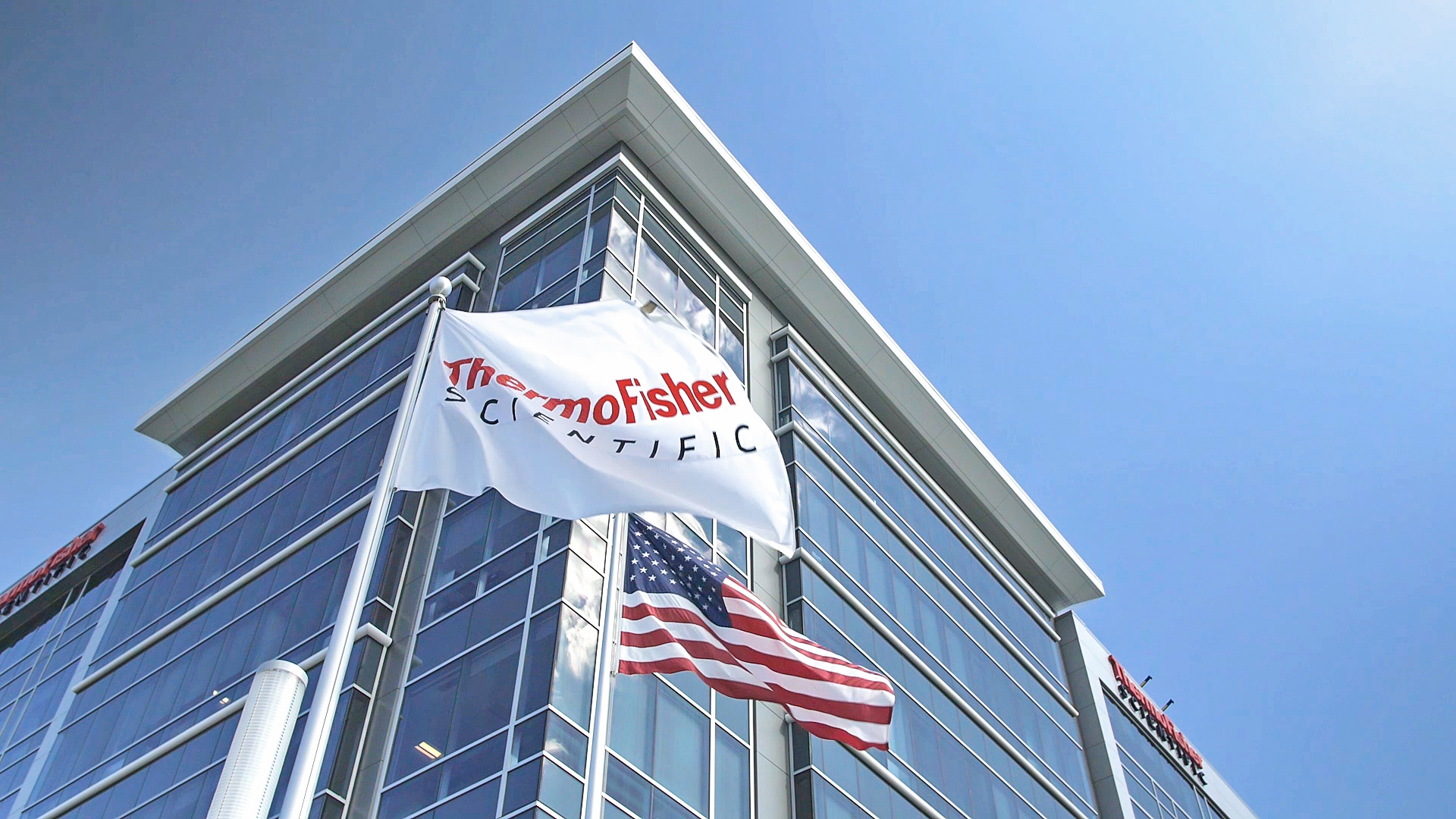
For Thermo Fisher Scientific, a life sciences and clinical research company, the decision to look for a solution to manage surgical costs started with a hard look at the numbers.
“We had over $40 million a year in surgeries,” said Tom Oksanen, Thermo Fisher’s Vice President of Global Benefits and Mobility.
Like many large employers, Thermo Fisher faced a growing concern around variation in quality, outcomes and member experience. The company wanted more than another vendor with broad promises and polished marketing materials. It sought a proven approach grounded in measurable quality and accountability.
That search ultimately led the organization to Lantern.
“It wasn’t a close call. Surgical Centers of Excellence jumped out at us, not only because of the finance opportunity. What followed very quickly was the quality aspect,” Oksanen said.
During a recent webinar, Oksanen joined Jason Tibbels, MD, Lantern’s Chief Medical Officer, and Erin Tatar, SVP of Consultant Relations, to explain how Thermo Fisher evaluated the COE landscape, what questions mattered most during the process and why the organization ultimately chose Lantern’s Network of Excellence.
Why Thermo Fisher Started Looking at Surgical COEs
Thermo Fisher Scientific is a global leader in life sciences with more than 125,000 employees across 50 countries and roughly 37,000 U.S. employees enrolled in its self-insured health plan.
As Oksanen explained, the company takes a disciplined approach to benefits strategy, prioritizing solutions with proven value and measurable impact.
“We’re not offering point solutions left and right,” Oksanen said. “We really look for tried-and-true solutions that have proven their value.”
Surgery emerged as a major opportunity. Lantern data shows 2-5% of a typical plan sponsor’s population drives roughly 50% of healthcare spend. Surgery alone accounts for about 20% of employer healthcare costs. At the same time, there’s enormous variation in both cost and quality across surgeons and facilities.
For Thermo Fisher, adopting a COE solution created an opportunity to improve outcomes while also reducing unnecessary spend.
“It’s a triple win,” Oksanen said. “We’re managing costs for the company and for our colleagues, and we’re improving the quality of outcomes, which has a favorable impact on the business from a productivity standpoint.”
It wasn’t a close call. Surgical Centers of Excellence jumped out at us, not only because of the finance opportunity. What followed very quickly was the quality aspect.”
The Quality Problem Employers Can’t Ignore
The discussion focused on the quality gaps that continue to exist in surgical care.
Dr. Tibbels explained that healthcare still struggles with preventable harm and inconsistent outcomes decades after the landmark To Err Is Human report first highlighted patient safety concerns.
“There just continue to be enormous gaps,” Dr. Tibbels said. “Tons of variation.”
Statistics discussed during the webinar reinforce the scale of the issue:
- 59.5% of surgical adverse events are potentially preventable
- 20.7% are definitely or probably preventable
- 38% of surgical patients experience adverse events during hospitalization
- 15.9% experience major adverse events
Dr. Tibbels also highlighted another uncomfortable reality: a relatively small percentage of surgeons account for a disproportionate share of complications and disciplinary actions.
“The good news is employer-sponsored health plans have the leverage to make a difference,” Dr. Tibbels said. “At Lantern, we’re trying to find those people who are absolutely experts at what they’re doing, down to the specific thing we’re asking them to do.”
Defining What Quality Really Means
One challenge employers face when evaluating COE vendors is defining quality itself. The panelists discussed how quality can mean many different things depending on the stakeholder. Is the care safe? Effective? Patient-centered? Timely? Efficient? Equitable?
For Thermo Fisher, network curation quickly became one of the most important differentiators.
“What jumped out at us was the network curation, the focus on outcomes and the focus on volumes,” Oksanen said.
Importantly, he said Lantern’s approach goes far beyond identifying “good doctors” at a general specialty level.
Dr. Tibbels explained that Lantern evaluates surgeons down to the procedure level because expertise can vary significantly, even within a specialty.
“It’s actually not enough to just be a good orthopedic surgeon,” Dr. Tibbels said. “The question is, ‘What are you good at?’”
A surgeon who excels at knee replacements may not be the best option for ligament repair or shoulder surgery. That level of specialization matters.
“For most surgical specialties, experience and volume matter,” Dr. Tibbels said. “What do you do every day? How much of it do you do? How long have you been doing it?”
At Lantern, we’re trying to find those people who are absolutely experts at what they’re doing, down to the specific thing we’re asking them to do.”
Looking Beyond Complications
Another key part of Thermo Fisher’s evaluation centered on appropriateness of care.
Dr. Tibbels emphasized that traditional quality metrics like complications and readmissions only tell part of the story.
“It’s one thing to have a surgery without complications,” he said. “But was it even a necessary surgery? Did you need it at all? Was it the right procedure?”
Lantern addresses that challenge through its partnership with Global Appropriateness Measures, which provides access to hundreds of clinically informed measures designed to assess whether surgery is appropriate in the first place.
That focus resonated strongly with Thermo Fisher.
Oksanen noted that avoiding unnecessary surgery may only represent a modest direct cost savings opportunity, but the impact on employees and families can be enormous.
“Think about what that impact has on the company, but more importantly, the impact it has on the colleague and their family, from a quality-of-life perspective, from a safety perspective,” Oksanen said.
The conversation also expanded beyond complications into patient-reported outcomes, which can identify issues often missed by traditional clinical metrics. The outcomes help evaluate recovery, pain levels, mental health and overall functional improvement after surgery.
“What kind of outcomes are you getting for the other 99% of people who don’t have a complication?” Dr. Tibbels asked. “How quick are you getting back to who you were?”
What Stood Out During Thermo Fisher’s Evaluation
Thermo Fisher approached the selection process with a highly structured evaluation methodology.
Oksanen said the company partnered with actuarial experts, clinicians and physicians throughout the process to validate vendor claims and challenge assumptions.
“Having clinicians and doctors in the room asking questions and following up, validating the data that’s been shared and supporting marketing claims was critical,” Oksanen said.
The organization also spoke directly with Lantern clients and sought feedback beyond formal references. One area that consistently stood out was Lantern’s care advocacy and navigation model.
“The care advocacy and care navigation capabilities really popped,” Oksanen said. “The thoroughness and end-to-end connection with the patient during this process, the NPS and how well taken care our colleagues would be. That gave us confidence we’d found a good solution.”
Transparency also impacted the decision to partner with Lantern.
“We’re a finance-first organization,” Oksanen said. “The ability to measure value and savings is a CFO-friendly output, so that was very valuable.”
Interestingly, Oksanen said Lantern’s willingness to engage tough questions actually increased his confidence in the organization.
“The Lantern team really got excited when we thought we found potential flaws,” he said. “We had great conversations.”
Building the Business Case for a COE
Selling the solution internally required more than just proving cost savings.
Oksanen explained that Thermo Fisher had already optimized many traditional cost-management strategies such as plan design, vendor negotiations and contract management. The organization recognized that future savings would increasingly require better demand management and higher-quality care.
“We made the case that we have to get in the ballgame from a demand-management perspective and from a quality perspective,” Oksanen said.
The quality argument helped leadership understand why a COE strategy was worth introducing to employees.
“If we’re going to disrupt our colleagues, let’s do it for a good reason, and this was a great reason,” Oksanen said.
Dr. Tibbels added that quality and affordability often go hand in hand.
“In general, high-quality care is lower-cost care,” he said. “If you’re removing waste from the system, you’re saving money.”
That message resonated strongly with Thermo Fisher’s finance-focused leadership team.
Key Takeaways for Benefits Leaders
The webinar offered a clear message for employers evaluating surgical COE solutions: quality can’t be reduced to broad scorecards or marketing claims.
Thermo Fisher’s process focused on deeper questions:
- How are surgeons evaluated at the procedure level?
- Who decides which providers enter the network?
- How is appropriateness measured?
- How are patient-reported outcomes tracked?
- What level of advocacy and support will employees receive during care?
For Oksanen, rigor mattered at every stage.
“Quality needs to win the day,” he said.
That philosophy ultimately shaped Thermo Fisher’s decision to partner with Lantern and build a surgical strategy focused on measurable outcomes, curated expertise and a better experience for employees.
For more on why Thermo Fisher chose Lantern as its surgical partner, check out the full webinar on demand.