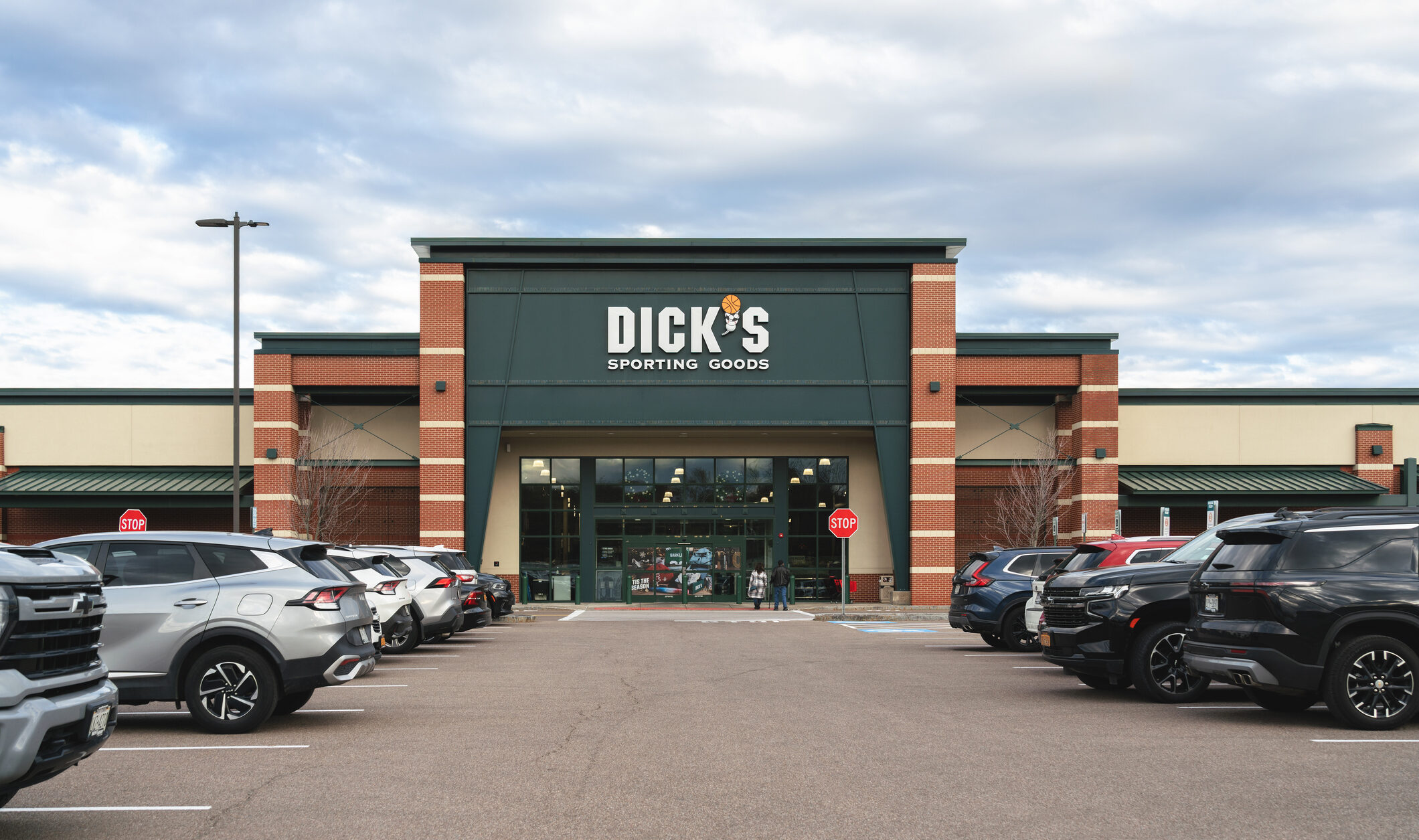
When DICK’s Sporting Goods identified specialty care, specifically musculoskeletal conditions and cancer, as the top driver of healthcare claims, they knew they needed to develop a strategy to lower costs.
Their primary goal: find a program to achieve better patient outcomes, better pricing, higher quality care and greater satisfaction for their teammates.
In this webinar, you’ll hear from:
Tammy Fennessy, Senior Director of Benefits at DICK’s Sporting Goods
Shelly Towns, Webinar Moderator, Chief Marketing Officer at Lantern
Key Takeaways
- How DICK’s Sporting Goods’ innovative, consumer-centric brand philosophy translates directly to its 2026 benefits strategy.
- What they looked for in an all-in-one specialty care solution to combat rising costs and simplify the journey for its teammates.
- Strategies for launching a new benefits platform to create the “wow” factor that drives teammate engagement.
An Innovative Benefits Strategy
DICK’s Sporting Goods is known for its consumer-centric approach in retail, and that same philosophy drives their benefits strategy. Tammy Fennessy, Senior Director of Benefits at DICK’s, says just as the company aims to inspire and equip athletes, the benefits team aims to empower its teammates with easy-to-use, high-quality healthcare options.
“We knew we had to break the pattern of traditional models that focus on isolated conditions,” Fennessy said. “Our strategy needed to be as innovative as our brand, translating directly into a seamless experience that puts our teammates’ health outcomes first.”
The Search for an All-In-One Specialty Care Solution
Combating rising costs while improving the teammate journey is a balancing act. Fennessy highlighted that they weren’t just looking for a vendor, but a partner who could handle the complexity of specialty care—from surgery to infusions to cancer support—in one place. It was one of the reasons they chose to partner with Lantern.
Shelly Towns, Chief Marketing Officer at Lantern, said that one consolidated solution creates clarity and engagement where other fragmented programs fail. “It’s about removing the friction so employees can focus on getting better,” she said.
For DICK’s, the ideal solution had to also offer an ecosystem advantage, connecting specialty care to their existing benefits, such as Pelago for substance use care and Hinge Health for virtual physical therapy.
The goal: maximize impact and ensure no teammate falls through the cracks. With care advocacy support from Lantern, Fennessy said their teammates will get a warm handoff when other healthcare is necessary.
Building the Foundation through Plan Design
To make a specialty care program successful, the plan design has to lead teammates to better care. Fennessy said it’s important to design your plan so that it actively steers teammates away from low-quality, high-cost settings and toward a true independent Centers of Excellence (COEs). There must be a ‘what’s in it for me?’ factor to drive utilization.
“You can’t just drop a program in and hope people find it,” Fennessy said, noting that there’s $0 cost share for teammates to use the Lantern program, and that they collect the IRS minimum for anyone on a high-deductible health plan at the end of the year.
“We had to design our plan to remove financial barriers,” she added. “If a teammate is willing to use a high-quality provider in the Lantern network, we want to reward that choice—often by waiving deductibles or coinsurance. It’s a win-win: they get better care at little to no cost, and the plan saves money on the backend.”
To also drive utilization, DICK’s offers travel incentives for when someone does need to travel for care, and all procedures are voluntary through the program, except for bariatric surgery.
Surgery: A Network of Excellence with High Quality, Local Providers
Surgery has historically been a black box of variable costs and outcomes, and Towns pointed out that high costs rarely correlate with high quality in surgical care.
The top reason DICK’s Sporting Goods chose Lantern as its specialty care partner was because of its focus on local access to the highest quality providers.
“It’s about steering our teammates to providers who have proven outcomes,” Fennessy said. “By utilizing a curated network, we ensure our teammates aren’t just getting surgery; they are getting the right surgery from the best possible doctor, which leads to faster recovery and fewer complications.”
With a dispersed population across the U.S. and 13K+ eligible employees, DICK’s also appreciated that providers within the Lantern network are often within 50-miles of where their teammates live.
“By utilizing a curated network, we ensure our teammates aren’t just getting surgery; they are getting the right surgery from the best possible doctor, which leads to faster recovery and fewer complications.”
Infusions: Optimizing the Site of Care
One of the often-overlooked drivers of specialty spend is infusion therapy. There’s a massive price variance between hospital-based infusions and those done in independent clinics or at home.
“The markup on hospital infusions is astronomical,” Towns said. “Moving that site of care can save a plan 50% or more instantly.”
Fennessy agreed, noting that for DICK’s, this wasn’t just about cost savings—it was about convenience. “If a teammate can get their infusion at a comfortable center closer to home, or even in their own living room, rather than navigating a massive hospital complex, that’s a huge specific win for their quality of life.”
Cancer: Holistic Support for the Hardest Moments
Perhaps the most critical piece of the puzzle is cancer care. Fennessy spoke passionately about the need for support that goes beyond just paying claims.
“When a teammate hears the word ‘cancer,’ the last thing they should worry about is administrative red tape,” Fennessy said. “We needed a partner that provided true cancer care navigation—nurses who can explain a diagnosis, coordinate second opinions with NCI-designated centers, and hold the teammate’s hand through the journey.”
Towns added that cancer care is where the ‘fragmentation’ of healthcare hurts the most. “By centralizing support, we can catch misdiagnoses early and ensure the treatment plan is appropriate, which is life-changing for the patient.”
Creating the ‘Wow’ Factor When Launching a Specialty Care Platform
Launching a new platform is one thing; getting teammates to use it is another. To prevent program failure, a communications strategy must create the “wow” factor and grab attention.
“You have to market your benefits just like you market a product,” Towns said.
Fennessy added that for DICK’s, this meant using strategies that resonate with their workforce’s culture—clear, energetic and focused on winning at health. By simplifying the message and highlighting the tangible value—like better access to top doctors and lower costs—they were able to drive early and sustained engagement.
“We stopped talking about ‘plan design’ and started talking about ‘winning,’” Fennessy said. “We used simple, bold headers like ‘Pay $0 for your surgery’ or ‘Get a top doctor for free.’ When you lead with the financial win, you get their attention. Then you can explain the details.”
Ready to launch your own specialty care strategy?
DICK’s Sporting Goods found a way to lower costs and improve lives by partnering with Lantern. If you’re looking to achieve similar results for your organization, let’s start the conversation.